

Exploring the realm of essential insurance types for businesses, this guide offers a detailed look at the key policies that every business should consider. From protecting assets to safeguarding against unforeseen events, the world of business insurance is vast and crucial for long-term success.
In the following paragraphs, we will delve into the specifics of each insurance type, providing insights and examples to help you navigate the complex landscape of business insurance with confidence.
Types of Insurance
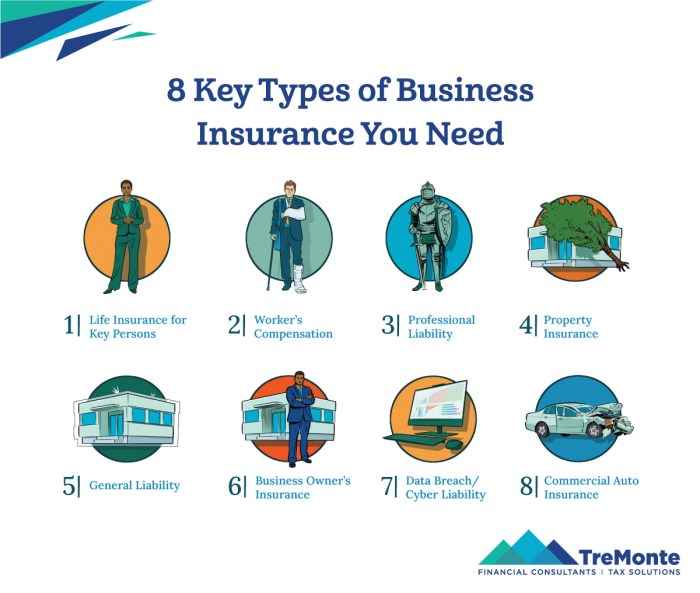
Insurance is a crucial aspect of risk management for any business, providing financial protection in case of unforeseen events. Here are the 10 essential insurance types every business needs:
1. General Liability Insurance
General liability insurance protects businesses from claims related to bodily injury, property damage, and advertising injury. It is essential for all businesses to have this coverage to safeguard against lawsuits from third parties.
2. Property Insurance
Property insurance covers damage to a business's physical assets, including buildings, equipment, and inventory. This insurance is vital for businesses that own or lease property to protect their investments.
3. Workers’ Compensation Insurance
Workers' compensation insurance provides benefits to employees who are injured or become ill on the job. It is mandatory for most businesses with employees and helps cover medical expenses and lost wages.
4. Professional Liability Insurance
Professional liability insurance, also known as errors and omissions insurance, protects businesses from claims of negligence or inadequate work. This coverage is crucial for professions like doctors, lawyers, and consultants.
5. Commercial Auto Insurance
Commercial auto insurance covers vehicles used for business purposes, protecting against accidents, theft, and damage. It is necessary for businesses that rely on vehicles for operations.
6. Cyber Liability Insurance
Cyber liability insurance helps businesses recover from data breaches and cyber-attacks by covering costs associated with legal fees, notification expenses, and data recovery. It is essential for any business that collects and stores customer information.
7. Business Interruption Insurance
Business interruption insurance compensates businesses for lost income and expenses during a temporary shutdown due to a covered peril. This coverage is vital for businesses that rely on continuous operations to generate revenue.
8. Product Liability Insurance
Product liability insurance protects businesses from claims related to injuries or damages caused by products they manufacture or sell. It is crucial for businesses involved in the production or distribution of goods.
9. Directors and Officers Insurance
Directors and officers insurance provides coverage for legal expenses and damages resulting from lawsuits against company executives. This insurance is essential for businesses with a board of directors or executive team.
10. Umbrella Insurance
Umbrella insurance provides additional liability coverage beyond the limits of other policies. It offers extra protection against catastrophic events and lawsuits that exceed primary policy limits.
General Liability Insurance
General liability insurance is a crucial coverage that businesses should have to protect themselves from potential financial losses resulting from claims of injury or damage.
What General Liability Insurance Covers
- Property damage caused by your business operations
- Bodily injury to a third party on your premises
- Legal fees and medical expenses in case of lawsuits
Potential Risks Covered
General liability insurance protects against risks such as slip-and-fall accidents, property damage, advertising injury, and libel or slander claims.
Scenarios where General Liability Insurance is Beneficial
- A customer slips and falls in your store, resulting in injuries
- Your product causes harm to a consumer
- An employee makes a damaging statement about a competitor
Comparison of General Liability Insurance Policies
| Policy Type | Coverage Limits | Premium Costs |
|---|---|---|
| Basic | Low | Affordable |
| Standard | Medium | Moderate |
| Enhanced | High | Higher |
Property Insurance
Property insurance is crucial for businesses with physical assets as it provides protection against damage or loss due to events like fires, theft, vandalism, or natural disasters. Having property insurance can help businesses recover quickly and continue operations without facing financial ruin.
Types of Property Insurance
- Building Insurance: Covers damage to the physical structure of the business property.
- Business Personal Property Insurance: Protects equipment, inventory, and furniture inside the building.
- Business Interruption Insurance: Provides coverage for lost income and expenses if the business is unable to operate due to a covered event.
- Equipment Breakdown Insurance: Covers repair or replacement costs for machinery and equipment that breaks down.
Examples of Property Insurance Benefits
Property insurance can help businesses recover by covering the costs of rebuilding or repairing damaged property, replacing stolen items, and reimbursing lost income during downtime. For instance, if a fire damages a retail store, property insurance can cover the cost of repairs, restocking inventory, and lost revenue while the store is closed for renovations.
Items Covered under Property Insurance
- Buildings
- Inventory
- Furniture and Fixtures
- Equipment
- Computers and Electronics
- Important Documents
Workers’ Compensation Insurance
Workers' compensation insurance is a type of coverage that provides benefits to employees who are injured or become ill as a result of their work. This insurance is mandatory in many places to ensure that employees are protected and receive proper compensation in case of workplace accidents or injuries.
It also helps employers by providing a system for handling these situations and protecting them from potential lawsuits.
Purpose and Benefits of Workers’ Compensation Insurance
Workers' compensation insurance provides medical benefits, wage replacement, and rehabilitation services to employees who are injured or become ill on the job. This coverage helps employees recover and return to work while also providing financial support during their recovery period.
For employers, workers' compensation insurance helps protect them from costly legal battles and potential lawsuits that could arise from workplace injuries.
- Medical Benefits: Covers the cost of medical treatment for work-related injuries or illnesses.
- Wage Replacement: Provides a portion of the employee's wages while they are unable to work due to a work-related injury.
- Rehabilitation Services: Helps injured employees recover and return to work through rehabilitation services.
Filing a Workers’ Compensation Claim
The process of filing a workers' compensation claim typically involves notifying the employer of the injury, seeking medical treatment, and submitting a claim form. Once the claim is filed, the employer's insurance company will investigate the claim and determine the benefits the employee is entitled to receive.
This process helps ensure that injured employees receive the necessary support and that businesses are protected from potential lawsuits.
Workers’ Compensation Claim Process Flowchart
| Step | Description |
|---|---|
| 1 | Employee is injured on the job |
| 2 | Employee notifies employer of the injury |
| 3 | Employer provides necessary forms for the employee to file a claim |
| 4 | Employee seeks medical treatment |
| 5 | Employee submits claim form to the employer |
| 6 | Employer's insurance company investigates the claim |
| 7 | Benefits are determined and provided to the employee |
Business Interruption Insurance
Business Interruption Insurance is a crucial type of coverage that helps businesses recover financially after unexpected disruptions that impact their operations.
Significance of Business Interruption Insurance
Business Interruption Insurance can be a lifesaver for businesses facing situations like natural disasters, fires, or other unforeseen events that force them to temporarily close. This insurance helps cover ongoing expenses like payroll, rent, and lost revenue during the downtime.
Examples of Situations
For example, a restaurant may experience a fire in the kitchen, leading to closure for repairs. Business Interruption Insurance would cover the lost income during this period, ensuring the business can continue to pay its employees and bills until reopening.
Comparison of Policies
Different Business Interruption Insurance policies may have varying coverage limits and exclusions. It's essential for businesses to carefully review the terms of each policy to ensure they have adequate coverage for their specific needs. Some policies may include additional coverage for extended periods of interruption or extra expenses incurred to resume operations.
Claiming Process and Documentation
To claim Business Interruption Insurance, businesses typically need to provide documentation of the disruption, such as proof of the event that caused the interruption and financial records showing the impact on revenue. It's important to keep detailed records and work closely with the insurance provider to ensure a smooth claims process.
Cyber Liability Insurance
In today's digital age, the need for cyber liability insurance has become increasingly crucial for businesses of all sizes. With the rise of cyber threats and data breaches, companies are exposed to potential financial losses and reputational damage, making cyber liability insurance a vital component of risk management strategies.Cyber liability insurance provides coverage for expenses related to data breaches, cyberattacks, and other cyber incidents.
This type of insurance helps businesses mitigate the financial impact of these events by covering costs such as forensic investigations, legal fees, notification costs, and credit monitoring for affected individuals.
Coverage Provided by Cyber Liability Insurance
- First-party coverage for expenses incurred by the insured business due to a cyber incident.
- Third-party coverage for claims and lawsuits brought against the business by affected parties.
- Data breach response and crisis management services to help businesses navigate through a cyber incident.
Real-Life Examples
- A major retail company experienced a data breach that exposed millions of customer records, resulting in costly lawsuits and reputational damage. Having cyber liability insurance helped cover the legal fees and settlement costs.
- In contrast, a small business fell victim to a ransomware attack and had to pay a hefty ransom to regain access to their systems. Without cyber liability insurance, the business faced significant financial losses.
Essential Components of a Cyber Liability Insurance Policy
- Coverage for data breach response and notification expenses.
- Business interruption coverage for revenue losses due to a cyber incident.
- Network security and privacy liability coverage for claims related to data breaches.
- Cyber extortion coverage for ransomware attacks and extortion threats.
Professional Liability Insurance
Professional liability insurance, also known as errors and omissions insurance, is crucial for service-based businesses to protect against claims of negligence or failure to perform professional duties. This type of insurance provides coverage for legal costs, settlements, and damages that may arise from client disputes.
Coverage and Types of Claims
Professional liability insurance typically covers claims related to errors, omissions, or negligence in the services provided by the business. This can include claims of professional misconduct, failure to deliver promised services, or inaccurate advice. The insurance also helps cover defense costs, settlements, and judgments in case of lawsuits.
Professions that Benefit
Professions that greatly benefit from having professional liability insurance include doctors, lawyers, consultants, architects, engineers, and accountants. These professionals are at a higher risk of facing malpractice claims or disputes related to their services, making professional liability insurance essential for their business protection.
Costs and Coverage Options
The costs of professional liability insurance can vary depending on factors such as the type of services provided, the coverage limits, and the business's claims history. Different insurance providers offer varying coverage options, so it is important for businesses to compare quotes and coverage details to find the most suitable policy for their needs.
Product Liability Insurance
Product Liability Insurance plays a crucial role in protecting businesses that manufacture or sell products. This type of insurance provides coverage in case a product causes harm or injury to a consumer, resulting in legal claims and financial losses for the business.
Risks Associated with Product Liability
Product liability risks include defective products, inadequate warnings or instructions, and design flaws that can lead to lawsuits, settlements, and damage to the company's reputation. Product liability insurance helps mitigate these risks by covering legal fees, settlements, and judgments.
- Defective Products: Product liability insurance protects businesses against claims arising from manufacturing defects or flaws in the product.
- Inadequate Warnings: Insurance coverage can help in cases where a product lacks proper warnings or instructions, leading to accidents or injuries.
- Design Flaws: Businesses can be held liable for design defects that result in harm to consumers, and product liability insurance can provide financial protection in such cases.
Case Studies
One notable case is the Johnson & Johnson talcum powder lawsuit, where the company faced numerous lawsuits from consumers claiming the product caused cancer. Having product liability insurance helped Johnson & Johnson cover the legal costs and settlements, protecting the business from significant financial losses.
Checklist for Assessing Need
- Identify the types of products your business manufactures or sells.
- Evaluate the potential risks associated with these products, including design flaws, manufacturing defects, and inadequate warnings.
- Assess the likelihood of product liability claims based on industry standards and past incidents.
- Review your current insurance coverage to determine if product liability insurance is included or if additional coverage is needed.
- Consult with an insurance agent to discuss the specific needs of your business and ensure adequate protection against product liability risks.
Commercial Auto Insurance
Commercial auto insurance is a crucial type of coverage for businesses that utilize vehicles as part of their operations. Whether it's a fleet of delivery trucks, company cars, or even personal vehicles used for work purposes, having commercial auto insurance can protect the business from financial losses in case of accidents or other unforeseen events.
Importance of Commercial Auto Insurance
Commercial auto insurance provides coverage for vehicles used for business purposes, protecting the company from liability in the event of accidents, theft, or damage. This type of insurance is essential for businesses that rely on vehicles to transport goods, employees, or equipment.
Without proper coverage, the business could face significant financial repercussions in the event of a mishap.
Coverage and Types of Vehicles
Commercial auto insurance typically covers liability for bodily injury and property damage, as well as medical payments and uninsured motorist coverage. It can also extend to various types of vehicles, including cars, trucks, vans, and specialty vehicles used for business purposes.
The coverage provided can be tailored to meet the specific needs of the business and the types of vehicles in use.
Examples of Incidents
Commercial auto insurance proved to be essential in various incidents, such as delivery trucks getting into accidents while on the job, company cars being stolen or vandalized, or employees getting injured in a work-related vehicle accident. In these situations, having the right commercial auto insurance coverage helped businesses mitigate the financial impact and continue operations smoothly.
Comparing Policies
When comparing different commercial auto insurance policies, businesses should consider factors such as coverage limits, deductibles, premiums, and additional features like roadside assistance or rental reimbursement. It's essential to evaluate the specific needs of the business and choose a policy that provides adequate coverage at a reasonable cost.
Directors and Officers Insurance
Directors and Officers Insurance, also known as D&O Insurance, is a crucial type of coverage for businesses with leadership roles. This insurance protects the personal assets of directors and officers in case they are personally sued for decisions made while managing the company.
Purpose of Directors and Officers Insurance
Directors and officers face various risks in their roles, including lawsuits from shareholders, customers, employees, or regulatory agencies. D&O Insurance helps protect them from personal financial loss due to legal expenses, settlements, or judgments arising from these lawsuits.
Examples of Lawsuits
One notable case where D&O Insurance played a significant role was the Enron scandal in 2001. The company's directors and officers were sued for fraud and mismanagement, leading to substantial financial losses. D&O Insurance helped cover the legal costs and settlements in this high-profile case.
Choosing the Right Policy
When selecting a Directors and Officers Insurance policy, businesses should consider the coverage limits, exclusions, policy terms, and the financial strength of the insurance provider. It's essential to tailor the policy to the specific risks faced by the company and its leadership team to ensure adequate protection.
Final Thoughts
As we wrap up our discussion on the 10 essential insurance types every business needs, it becomes clear that a comprehensive insurance strategy is not just a luxury but a necessity in today's business world. By understanding the importance of each type of insurance and how it can protect your business, you are better equipped to make informed decisions that safeguard your company's future.
FAQ Section
What is the importance of business interruption insurance?
Business interruption insurance is crucial for businesses facing unexpected disruptions such as natural disasters or pandemics. It helps cover lost income and ongoing expenses during the downtime.
Why is cyber liability insurance becoming increasingly essential?
Cyber liability insurance is vital in the digital age due to the rising threat of cyberattacks. It helps mitigate financial losses and reputational damage resulting from data breaches.
What does product liability insurance protect against?
Product liability insurance shields businesses from legal claims related to injuries or damages caused by their products. It covers legal fees, settlements, and judgments.
Who benefits the most from professional liability insurance?
Service-based businesses such as consultants, lawyers, and healthcare providers benefit greatly from professional liability insurance as it protects them against claims of negligence or errors.
How does directors and officers insurance protect businesses?
Directors and officers insurance safeguards the personal assets of company leaders from lawsuits alleging wrongful acts in their managerial roles. It provides financial protection and peace of mind.

